
Your Journey Through Time on the Peak Way Walk
Today is World Heritage Day, a time when the focus is on the many features that we can easily take for granted. And I’ve been reflecting on the plethora of heritage which you’ll encounter on the Peak Way Walk. Everything from historical buildings and old railways to canals and old customs. When I planned the Peak Way Walk, one of my objectives was to showcase the heritage which you can see along the route. I think it is fair to say that this has been achieved, and this will add interest and enrich your hike.

A Journey Through Time
Heritage is more than just history—it is the living memory of landscapes, buildings, and communities that have shaped who we are today. Across the Peak District, scattered among moors and hills, river valleys, and quiet villages, are places that tell powerful stories of industry, faith, and daily life. The route along the Peak Way Walk offers a window into the rich and layered past of the region.
Shortly after leaving Woodbank Park, Stockport, you’ll pass Goyt Hall Farm which stands as a reminder of rural traditions that have endured for generations. Farms like this were once the backbone of local economies, where families lived and worked in rhythm with the land. The surrounding fields and rural countryside reflect a way of life built on resilience and close ties to nature.
Not far away, Chadkirk Chapel offers a quieter but equally profound glimpse into the past. Nestled in peaceful surroundings, the chapel has long been a place of reflection and spiritual connection. Its simple architecture and tranquil setting speak to the importance of faith in shaping community life. Over time, it has also become a cultural landmark, preserving stories not just of religion, but of local identity and belonging.
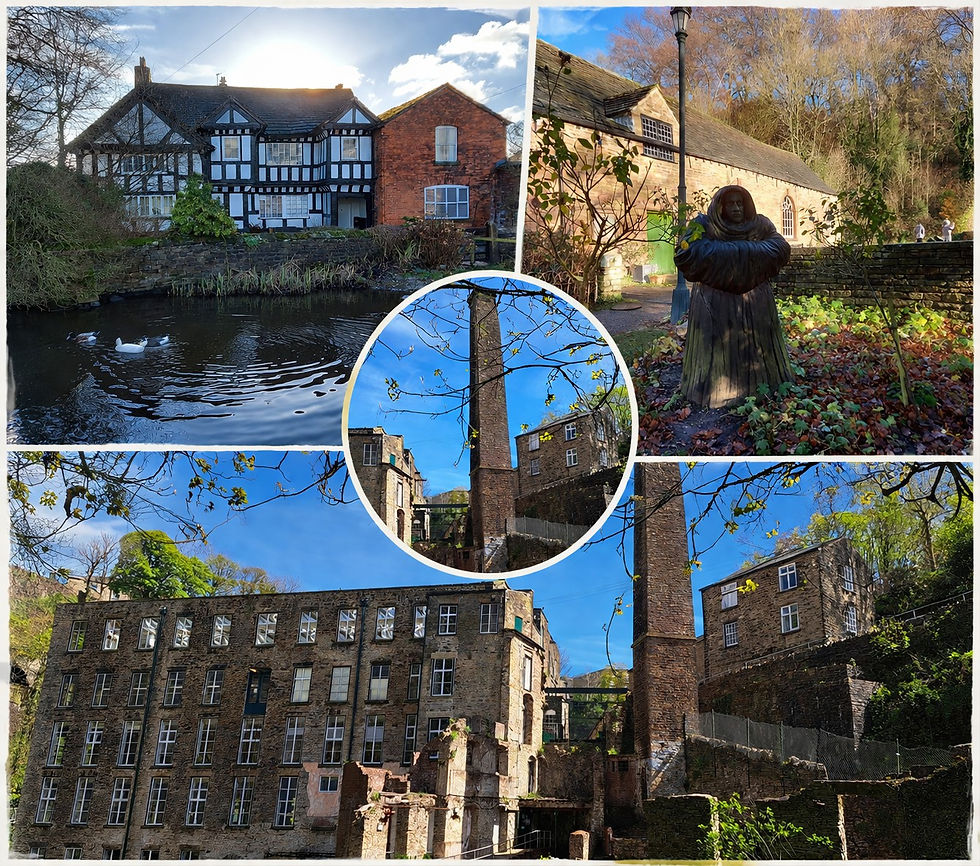
The story of industry emerges powerfully at Torr Vale Mill. Once a hub of production and innovation, the mill reflects the transformative impact of the Industrial Revolution. Water-powered machinery, skilled labour, and expanding trade networks turned such sites into engines of economic growth. Though many mills have fallen silent, their towering structures remain as monuments to the ingenuity and determination of those who worked within them.
In contrast, the grandeur of Lyme Hall and Chatsworth House reveals another side of heritage—that of aristocratic life and architectural splendour. These estates, with their sweeping grounds and carefully designed interiors, illustrate the wealth and influence of landed families. Yet beyond their elegance, they also tell stories of changing social structures, from the height of aristocratic power to their evolving roles in public life today as cultural and historical attractions.

Ashford Bobbin Mill brings attention back to industry, but on a more specialised scale. Here, the craft of producing wooden bobbins played a vital role in supporting the textile trade. It is a reminder that even small, focused industries contributed significantly to the broader economy. The machinery, techniques, and skills associated with such work highlight a fascinating intersection of craftsmanship and industrial progress.

Magpie Mine, with its stark and atmospheric remains, tells a more rugged story of extraction and labour. Mining communities faced harsh conditions, yet their efforts were essential in providing the raw materials that fuelled industry – in this case lead. The site stands today as both a testament to human endurance and a poignant reminder of the costs associated with industrial advancement.
The Lime Kilns at Miller’s Dale represent an often-overlooked aspect of heritage: the processes that supported agriculture and construction. Lime production was crucial for improving soil fertility and creating mortar for building. These kilns, carved into the landscape, illustrate how natural resources were harnessed and transformed to meet human needs.
Together, these sites form a tapestry of heritage that is both diverse and interconnected. From farms and chapels to mills, mines, and grand estates, each place contributes a unique thread to the story of the region. They remind us that history is not confined to textbooks—it lives on in the spaces we can still walk through, observe, and experience.
Preserving and appreciating these locations is vital, not only for their historical significance but for the sense of identity they provide. They encourage us to reflect on how past generations lived, worked, and adapted, and in doing so, help us better understand our own place within an ongoing story. In exploring these landmarks, we are not just looking back—we are engaging with a heritage that continues to shape the present and inspire the future.
Railway Heritage on the Peak Way
There is something uniquely evocative about old railway lines. Long after the last train has passed, their routes remain etched into the landscape—quiet corridors of memory that once carried people, goods, and stories across the countryside. And along the Peak Way, these former railways have found new life, offering a rich and fascinating heritage that blends travel, and transformation.
The Sett Valley, once alive with the sound, sight and smell of passing trains, is now a peaceful trail that follows the route of a former railway line linking Hayfield to Manchester, as far as New Mills. The railway came to Hayfield in 1868 and served thousands of passengers who came to visit the countryside, as well as goods trains which serviced the mills which were located along the valley. Walking along here, it is easy to imagine the steam engines that once connected small communities to larger towns. The gentle gradients and carefully engineered curves reveal the precision with which these routes were originally designed, even as nature has softened their edges.
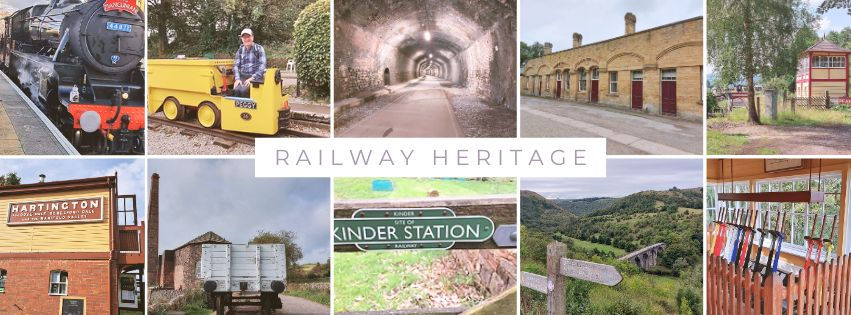
Nearby, Kinder Station represents another side of railway heritage. As you walk along Kinder Road, you’ll see an information board about the branch line which was built to transport materials, and workers, during the construction of Kinder Reservoir which was opened in 1912. There were over 700 workers who, along with their families, were housed in temporary huts.
Not all railways have faded into silence. Peak Rail stands as a living tribute to the region’s railway past, where restored trains once again run along preserved tracks. Here, heritage is not just observed—it is experienced. The sights, sounds, and even smells of traditional rail travel are brought back to life, allowing visitors to step directly into history.
Engineering achievements are perhaps most dramatically seen in places like Cressbrook Tunnel. Carved through solid rock, it is testimony to the ambition and skill of Victorian engineers who overcame formidable natural obstacles. As you walk through the tunnel it’s hard to ignore the striking reminder of the scale and determination behind railway expansion.
Smaller structures also carry deep historical significance. Hartington Signal Box, for example, reflects the intricate systems that kept railways running safely and efficiently. Signal boxes were the nerve centres of the network, where careful coordination ensured that trains moved smoothly across shared tracks. And you can call inside and see the rows of levers which were used to operate the old signals.
In Bakewell, the preserved façade of the former station provides a tangible link to the town’s railway heritage. Though trains no longer arrive, the building remains a familiar landmark - memories of an era when rail travel shaped daily life and local economies.
The Monsal Trail is perhaps one of the most celebrated examples of railway transformation. As you approach it on the Peak Way Walk along Monsal Dale, you’ll no doubt be in awe when you first spot the iconic viaduct. Then, following the path of the former line, you’ll enjoys sweeping views of the Derbyshire countryside. It is a place where industrial history and natural beauty coexist in harmony.
Further afield, the route at Middleton Top and the High Peak Trail reveal a different kind of railway story—one of early industrial transport. These lines were once used to move minerals across challenging terrain, relying on ingenious systems of inclines and stationary engines. Today, the trails preserve these features, offering insight into the evolution of railway technology.
The Tissington Trail continues this theme, stretching across the landscape along a former railway route. Its steady gradients and open vistas make it an enjoyable part of the route but beneath its calm surface lies a history of movement and connection that once played a vital role in the region.
The Steeple Grange Light Railway adds a unique dimension to this heritage. As a narrow-gauge line, it reflects a more specialised aspect of railway history, originally linked to quarrying operations. Its preservation ensures that even these smaller, more niche stories are not lost to time.
Together, these sites form a remarkable network of heritage that stretches far beyond the rails themselves. They tell stories of innovation, community, and change—of how the railway once reshaped the landscape and how, in turn, the landscape has reclaimed and reimagined those routes.
Exploring these former railways is not just about looking back; it is about experiencing history in motion. Whether walking through the Cressbrook tunnel, standing beside Hartington signal box, or admiring the trains on Peak Rail, each moment offers a connection to the past. A memory of the railway age, but also its lasting influence on the world we live in today.
Waterways and Wartime
Heritage often reveals itself in layers—some enduring, others shaped by moments of urgency and innovation. On the Peak Way, this contrast is strikingly visible in the story of the Peak Forest Canal, the engineering elegance of Marple Aqueduct, and the extraordinary wartime history of the Dambusters, who practised their revolutionary ‘bouncing bomb’ on nearby reservoirs.
The Peak Forest Canal stands as a testament to the ingenuity of the Industrial Revolution. Built to transport limestone from the quarries of Derbyshire to the manufacturing centres of the north-west, it played a crucial role in fuelling industry and growth. Today, its calm waters and towpaths offer a very different experience. You’ll see narrowboats glide slowly along routes once busy with trade, and you’ll walk on the same paths that labourers and boatmen followed centuries ago. The canal reminds us how waterways once served as vital arteries of commerce, shaping both the economy and the landscape.
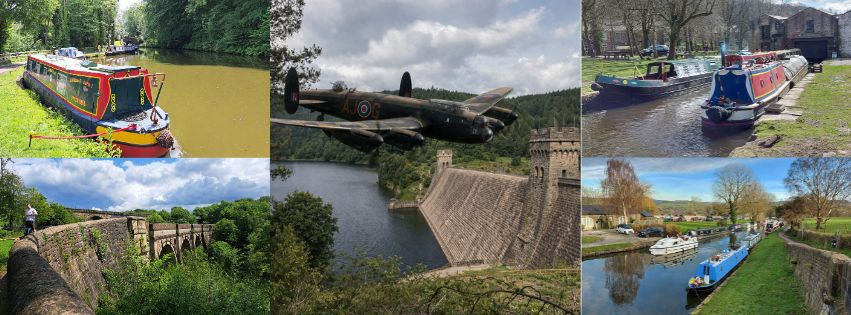
One of the most remarkable features along this route is Marple Aqueduct. Towering above the River Goyt, it is an extraordinary feat of engineering. Constructed in the early nineteenth century, the aqueduct carries the canal high across the valley, its elegant arches blending seamlessly with the surrounding countryside. As you walk across it, you’ll appreciate not only the craftsmanship involved but also the ambition of those who designed and built such structures at a time when modern machinery did not yet exist.
But the heritage of the Peak District is not confined to industry and transport. During the Second World War, its reservoirs became the unlikely setting for one of the most daring military innovations of the era. The Dambusters—formally known as No. 617 Squadron—used these waters to practise the technique of skipping a specially designed bomb across the surface, enabling it to breach heavily defended dams.
Reservoirs such as those in the Derwent Valley provided the perfect conditions for these trials and it was here that pilots refined the precise speed, height, and timing required for success, a combination that demanded exceptional skill and courage.
The eventual mission, carried out in 1943, became one of the most famous operations of the war. While its impact has been widely discussed, the connection to the Peak District adds a deeply local dimension to a globally significant event. As you walk past these reservoirs, you’ll find it difficult to imagine the intensity and secrecy that once defined them, yet the story remains embedded in the landscape.
Exploring these sites offers more than scenic beauty; it provides a journey through the evolving story of human endeavour. From the quiet persistence of canal builders to the daring ingenuity of wartime engineers and pilots, each chapter adds depth to our understanding of the past.
There are endless miles of the drystone walls which help to define this unique landscape. Then there are the churches and chapels, the bridges and viaducts. There’s the cultural heritage which includes the dressing and blessing of wells, scarecrow festivals, arts and crafts. And of course, delicacies that were born in the Peak District, the Bakewell Pudding arguably being the most well-known.

In the Peak District, heritage flows not just through museums or archives, but through water, stone, and memory. It invites us to pause, look closer, and recognise the extraordinary stories that lie just beneath the surface of even the most tranquil surroundings. So, as you can see, it’s not only the stunning views and beautiful countryside that you’ll enjoy on the Peak Way Walk, but it’s fascinating and diverse heritage too. And of course, the guide book ‘Walking the Peak Way’ provides more information about these features which will help enrich your journey.


Comments